Grey is Green
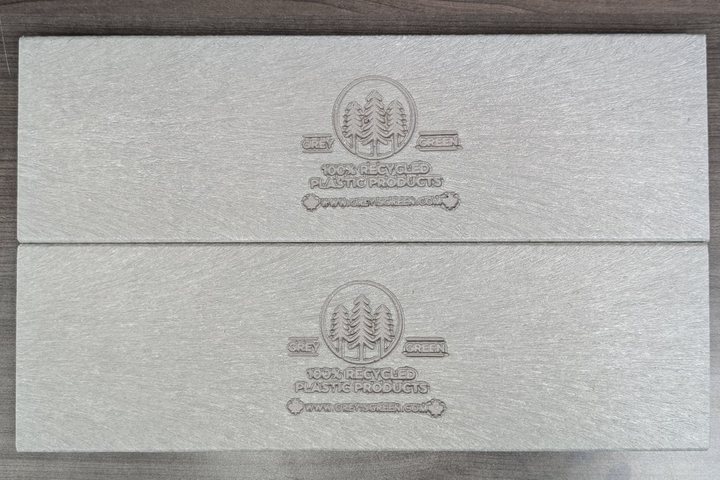
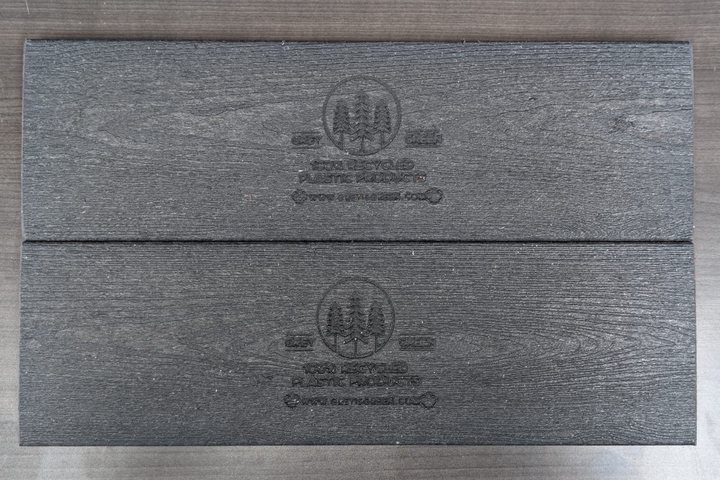
Recycled plastic lumber boards in grey, made from 100% recycled HDPE

A guide to the material

Plastic Lumber: What It Is and Why It Lasts

Dimensional building board made from recycled plastic instead of wood. It won't rot, won't splinter and never needs sealing. Here is how it is made, what it is good at, and where you should use something else.

The short answer

What Is Plastic Lumber?

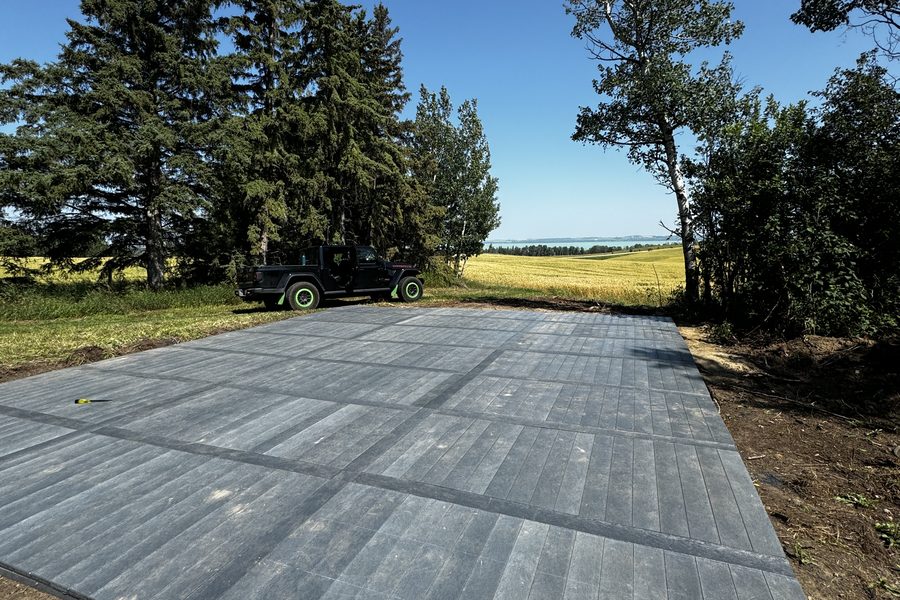
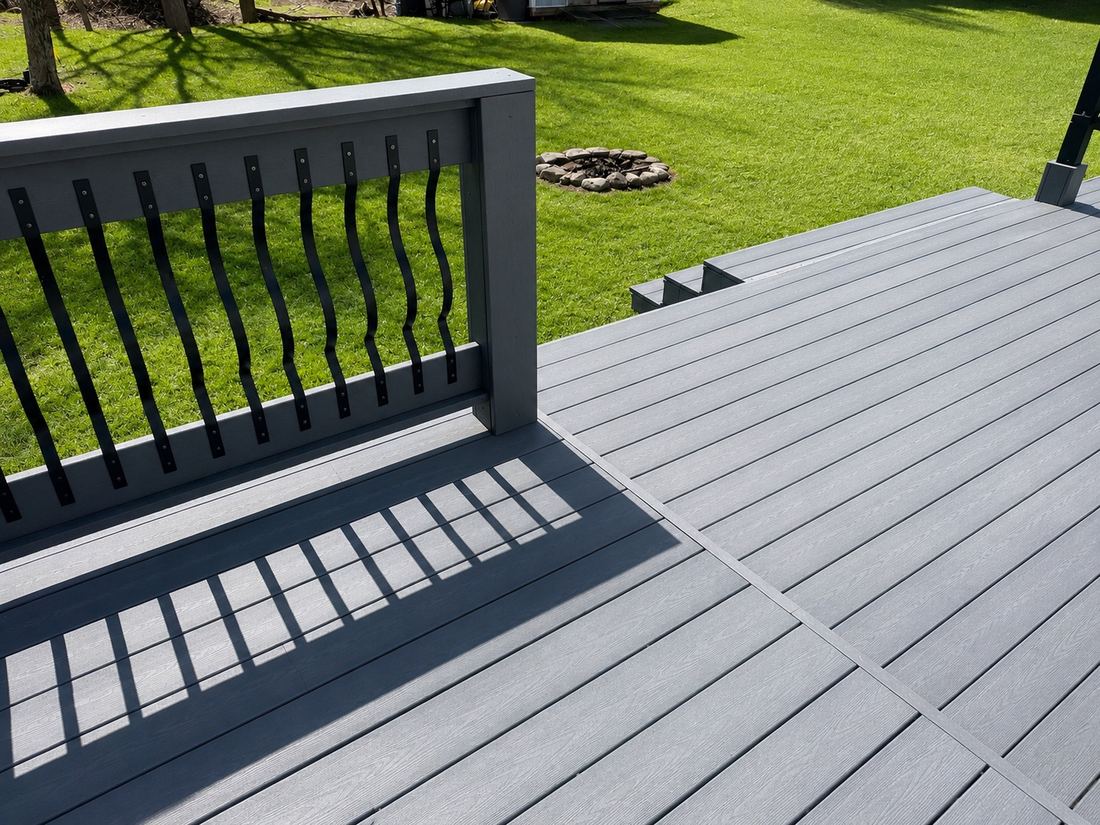
Plastic lumber is a building material made from recycled plastic, formed into the same dimensional profiles as sawn timber: deck boards, rails, fence boards, planks. It contains no wood, so it does not absorb water, rot, splinter or need staining or sealing.

Most plastic lumber, including ours, is made from high-density polyethylene, or HDPE: the plastic used for pails, containers, bottles and bins. Waste HDPE is collected, cleaned, ground and melted, then extruded into solid board. Because it is a single material all the way through rather than a coating over a core, a cut end needs no sealing and a scratch is the same colour as the surface.

It is not the same thing as composite decking. Composite is wood flour bound in plastic, usually with a protective cap; the wood content is what gives composite stiffness, and also what gives it something to absorb water. Plastic lumber has no wood content at all.

At a glance

Recycled Plastic Lumber, in Four Numbers

Made from100% recycled HDPE
Expected service life50+ years*
Water absorptionNone
MaintenanceWash as needed

*Estimated service life depends on installation, use and environmental conditions.

What it is made from

Waste Plastic That Had Nowhere Else to Go

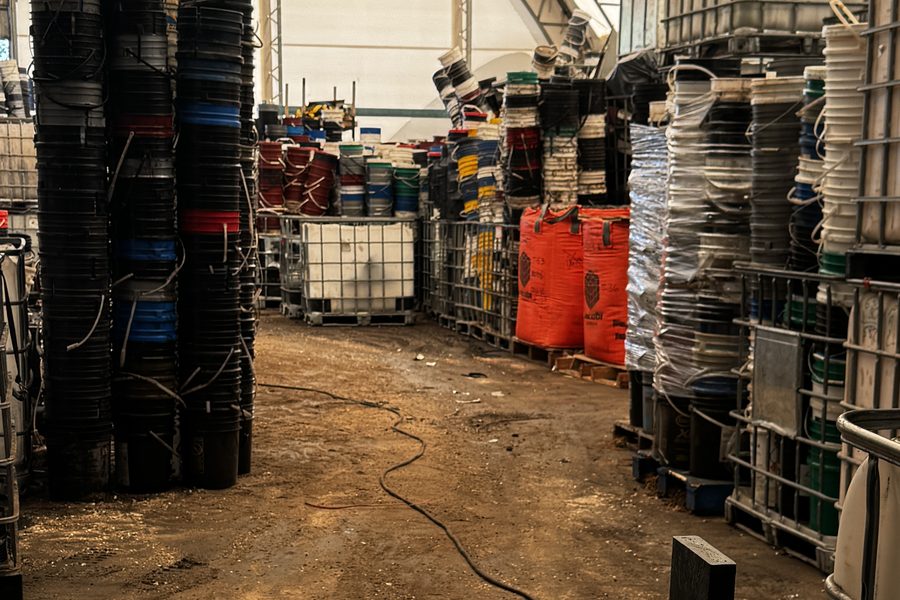
Every board begins as something somebody threw away. In our case, specifically the streams that are hardest to recycle and least worth money to anybody handling them.

How it is made
Used paint and oil pails collected for recycling into plastic lumber

The four streams we take

  • Used oil containers: among the hardest plastics in Canada to recycle: dirty, mixed and contaminated with the thing they held
  • Paint pails: recovered through Alberta's regulated paint recycling programme
  • Rolling garbage bins: household wheelie bins at the end of their service life
  • Beer can carriers: PakTech rings from a local brewery, a small stream that is genuinely hard to place

Canadians discard roughly three million tonnes of plastic a year and recycle under a tenth of it. Pails and containers sit at the difficult end of that: too contaminated for most processors, too low in value to be worth cleaning. Turning them into a board that lasts fifty years is one of the few things that makes handling them worthwhile.

From waste to board

How Plastic Lumber Is Made

Three steps, all of them under one roof at our plant in Lacombe, Alberta.

Used plastic pails collected for recycling

Collected

Waste HDPE is collected through regulated provincial recycling programmes, then sorted by material and cleaned of what it was holding.

Recycled HDPE pails ground down into flake, the feedstock for plastic lumber

Ground

The material is ground down to flake and blended, turning a dirty, mixed stream into consistent feedstock.

Recycled HDPE being extruded into plastic lumber boards

Extruded

The flake is melted and pushed through a die that gives it its profile, the same process that makes plastic pipe, in the shape of a board.

Stacks of finished recycled plastic lumber boards on the plant floor

Solid board

Cooled, cut and stacked. No preservative is applied, nothing is added to make it weatherproof, and no coating goes on the outside. It does not need any of them.
Why it lasts

Won't Rot. Won't Splinter. Won't Ever Need Sealing.

Plastic lumber absorbs no water at all. Nearly every advantage on this page follows from that one fact.

It cannot rot

Rot is organic material decomposing in the presence of moisture. There is no organic material in the board, and no moisture gets into it.

It cannot splinter

Splintering happens along wood grain. There is no grain and no fibre, so the surface stays as it is however wet or worn it gets.

Freeze and thaw do nothing

Frost damage happens when water inside a material freezes and expands. With no water inside the board, a Canadian winter has nothing to work on.

Nothing leaches out

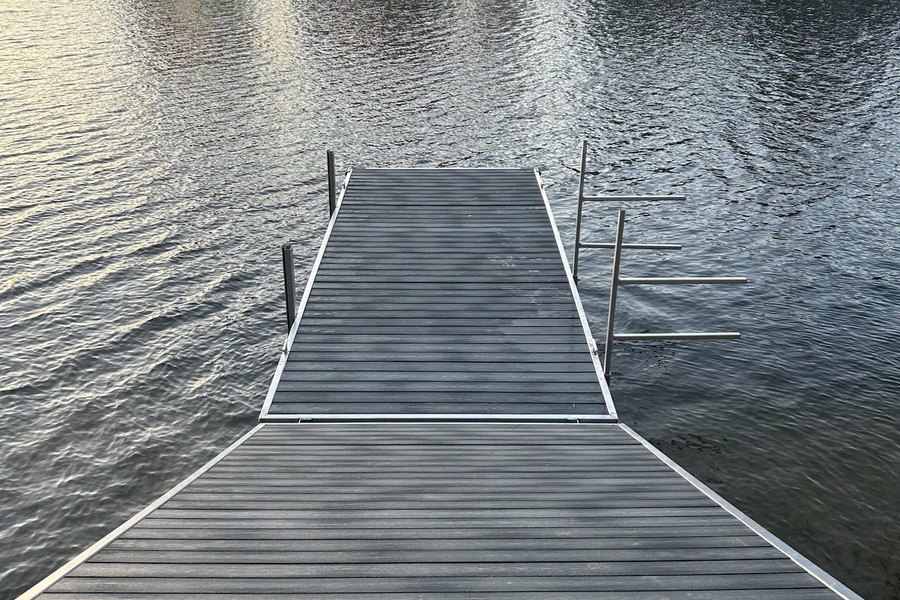
Untreated polymer with no preservatives, so it can sit against soil, feed, garden beds and open water without putting anything into them.

Insects have no interest

Wood-boring insects eat wood. There is nothing in the board for them.

There is no finish to fail

The colour runs right through the material rather than sitting on top of it, so there is no stain to reapply and no cap to breach.

How it compares

Plastic Lumber, Composite and Treated Wood

The three get shelved next to each other and behave very differently once they are outside.

Full comparison
No wood

Plastic lumber

100% plastic, solid through. No water uptake, no rot, no splintering, safe in ground contact and in water. Less stiff than timber, and it moves more with temperature.

Part wood

Composite decking

Wood flour bound in plastic, usually capped. Lower maintenance than timber, but it still contains wood, and it is generally not rated for ground contact or permanent immersion.

All wood

Pressure-treated timber

The cheapest option on the invoice and the stiffest of the three. It absorbs water, so it will eventually rot, splinter and need refinishing, and it carries preservative chemistry.

The environmental case

A Building Material That Empties a Landfill

Most sustainable building products are about using less of something. This one consumes a waste stream that would otherwise be buried, and the plastics it takes are the ones almost nobody else will handle.

100% recycled
Nothing new is made
No virgin plastic is produced for it. Every board is material that already existed and had reached the end of its first life.
The hard streams
The plastics nobody takes
Oil containers and paint pails are contaminated, mixed and low value. Diverting the easy plastics is common; diverting these is not.
Regulated and audited
Verified, not self-declared
Feedstock comes through Alberta's regulated recycling programmes, which means the volumes are third-party audited.
Fifty years, not five
It stays out of the waste stream
A product that lasts decades and needs no chemical treatment is not going back to landfill any time soon, and it replaces one that would have.

No preservatives, in or out

Pressure-treated timber gets its life from chemistry applied to it. Plastic lumber gets its life from what it is. Nothing was added to make it last, so there is nothing in it to leach into soil, groundwater, garden beds or a lake, which is why it ends up around community gardens, shorelines and livestock.

A diversion figure for your project

Because we collect and process the material ourselves, we can tell you the weight of plastic a specific order kept out of landfill, in writing. Municipalities put it in committee reports; builders put it on site boards.

How councils use it

The honest part

Three Things to Know Before You Build With It

It moves more with temperature than wood

Solid plastic expands and contracts more than timber as the temperature changes. It is straightforward to allow for. The gapping and fastening are set out on the install sheet for your run length. But it is not something to ignore. Fasten it tight with no room to move and you will see the result.

It is less stiff than timber

Plastic lumber flexes more than sawn wood over the same unsupported distance. That is why joist spacing matters and why we ask what you are building before you order. Tell us the application and we will tell you what our board is suited to, including when the answer is that you need something else.

It costs more on the invoice

More than treated timber, usually more than cedar. The argument for it is what happens afterwards: no staining, no sealing, no replacement boards in the wet spots, and no rebuild. If the project is temporary or somewhere permanently dry, that argument does not apply and we would say so.

Common questions

Plastic Lumber, Answered

What is plastic lumber made of?

Ours is made from 100% recycled high-density polyethylene (HDPE) collected as used oil containers, paint pails, end-of-life wheelie bins and beer can carriers. There is no wood fibre in it and no chemical treatment applied to it.

How long does plastic lumber last?

Expected service life is 50+ years, depending on installation, use and conditions. Because there is no wood in it to rot and no coating to fail, the usual causes of failure in outdoor timber simply do not apply.

Is plastic lumber strong?

It is tough and impact-resistant, and it does not weaken as it weathers the way wood does. It is, however, less stiff than sawn timber over the same unsupported distance, so spacing and support matter. Tell us the application and we will tell you what our board suits.

Is plastic lumber the same as composite decking?

No. Composite contains wood flour bound in plastic, usually with a cap on the outside. Plastic lumber has no wood content at all, which is why it can go into ground contact and permanent immersion where most composite cannot.

Is plastic lumber environmentally friendly?

It is made entirely from waste plastic that would otherwise be landfilled, including streams most recyclers will not take. No virgin plastic is produced for it, no preservative chemistry goes into it, and it lasts decades, so the material stays out of the waste stream rather than cycling back into it.

Does plastic lumber rot, splinter or need sealing?

No to all three. It absorbs no water, so it cannot rot. It has no grain, so it cannot splinter. The colour runs through the board, so there is no finish to reapply, washing it is the entire maintenance schedule.

Can you cut and drill plastic lumber?

Yes, with ordinary tools. Circular saw, mitre saw, standard drill and screws. No special blade is needed and cut ends need no sealing, because the cut face is the same material as the surface.

Does plastic lumber fade?

Any material outdoors changes slightly in its first months of sun exposure. Because the colour is the material rather than a coating over it, there is no finish to peel, flake or wear through to a different colour underneath.

Where is your plastic lumber made?

In Lacombe, Alberta. We collect the material with our own trucks, process it at our own plant and sell it from Lacombe and from Georgina, Ontario.

Planning a Project With It?

Send the dimensions and we'll count the whole thing: boards, fasteners and a cut layout, priced and back with you the next business day. Or just ask for a sample and see the material first.

Get in touch