Grey is Green
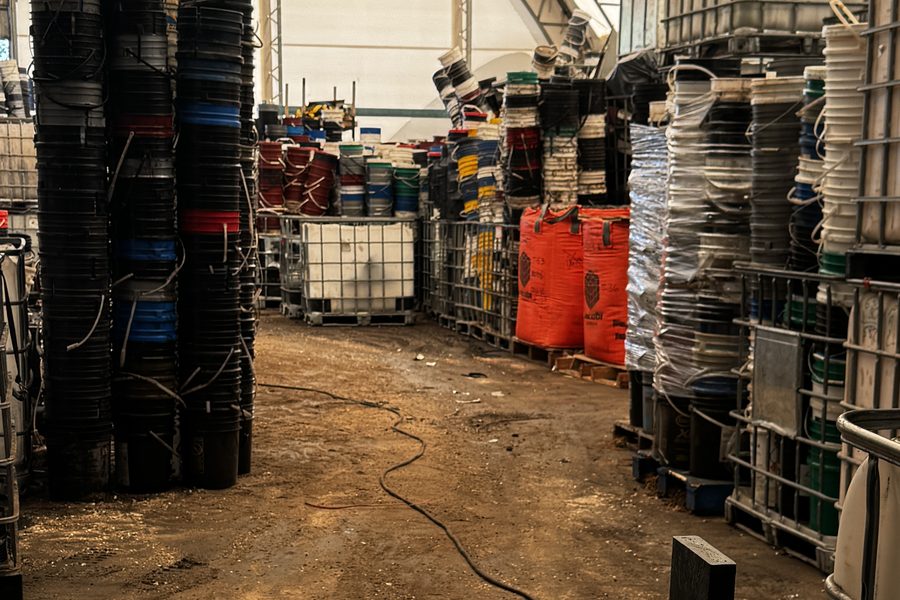
Used paint and oil pails collected for recycling into plastic lumber

Our material

Pails In. Lumber Out.

Solid recycled HDPE, made from the plastics nobody else wants: collected, cleaned and extruded at our own plant in Lacombe.

From waste to board

What Our Plastic Lumber Is Made From

Paint and oil pails, recovered through Canada's regulated recycling programmes (one of the harder streams to do anything useful with) cleaned and extruded into solid board.

Used paint and oil pails collected for recycling

Collected

Paint and oil pails, end-of-life wheelie bins and beer can carriers, recovered through regulated Canadian recycling programmes. Our own trucks do the collecting across Alberta.

Recycled HDPE pails ground down into flake, the feedstock for plastic lumber

Ground

Cleaned of whatever they held, then ground to flake. Colours are not sorted, so the batch decides the shade.

Recycled HDPE being extruded into plastic lumber boards

Extruded

Melted and pushed through a die that gives the board its profile. No wood fibre goes in and no chemical treatment is applied.

Stacks of finished recycled plastic lumber boards on the plant floor

Solid board

Solid all the way through the section. Cut it, drill it and fasten it with ordinary tools: no sealing of cut ends, nothing to wait for.

Know what you are buying

This Is Not Composite

The two get shelved together and they are not the same material. The difference decides where each one can go.

Composite decking

Wood flour mixed with plastic, usually with a protective cap on the outside. The wood fibre is what gives it stiffness, and what gives it something to absorb water, feed mould and swell.

It is generally not rated for ground contact or permanent immersion, and if the cap is breached the core underneath is exposed.

What we make

100% recycled HDPE. No wood fibre, no filler, no cap, no chemical treatment. The board is the same material at the surface as it is at the centre, which is why a cut end needs no sealing and a scratch is the same colour as the face.

It absorbs no water at all. That is the single property everything else follows from: no rot, no swelling, no soft ends, no freeze-thaw splitting, and nothing to leach into soil or water.

See it compared with cedar and composite

Why it lasts

Never Rots, Never Splinters, Never Needs Sealing

Zero water uptake
Never rots
Solid HDPE absorbs nothing, so there is no swelling, no decay and no soft ends after a wet spring.
No grain, no fibre
Never splinters
Bare feet, bare hands and livestock are all fine with it, in year one and in year twenty.
Untreated polymer
Nothing leaches
No preservatives in the board, so it sits safely against soil, feed, garden beds and open water.
Colour runs through
Never needs sealing
No sanding, staining or annual refinish. Wash it when it's dirty and that's the whole schedule.

The honest part

Two Things Worth Knowing

It moves with temperature

Solid plastic expands and contracts more than timber does as the temperature changes. It is not a problem when it is allowed for. The install sheet that comes with every package sets out the gapping and the fastening for your run. It is only a problem when somebody fastens it like wood and leaves it no room.

It is heavier than the timber it replaces

Noticeably so. That weight is part of why it sits flat and stays put, but it is worth knowing before you plan a lift onto a second-storey deck or hand a board to one person expecting the weight of cedar.

Put a Piece of It in Your Hand

Ask for a sample and see the cut end for yourself. It tells you more about this material than any photograph.

Ask for a sample