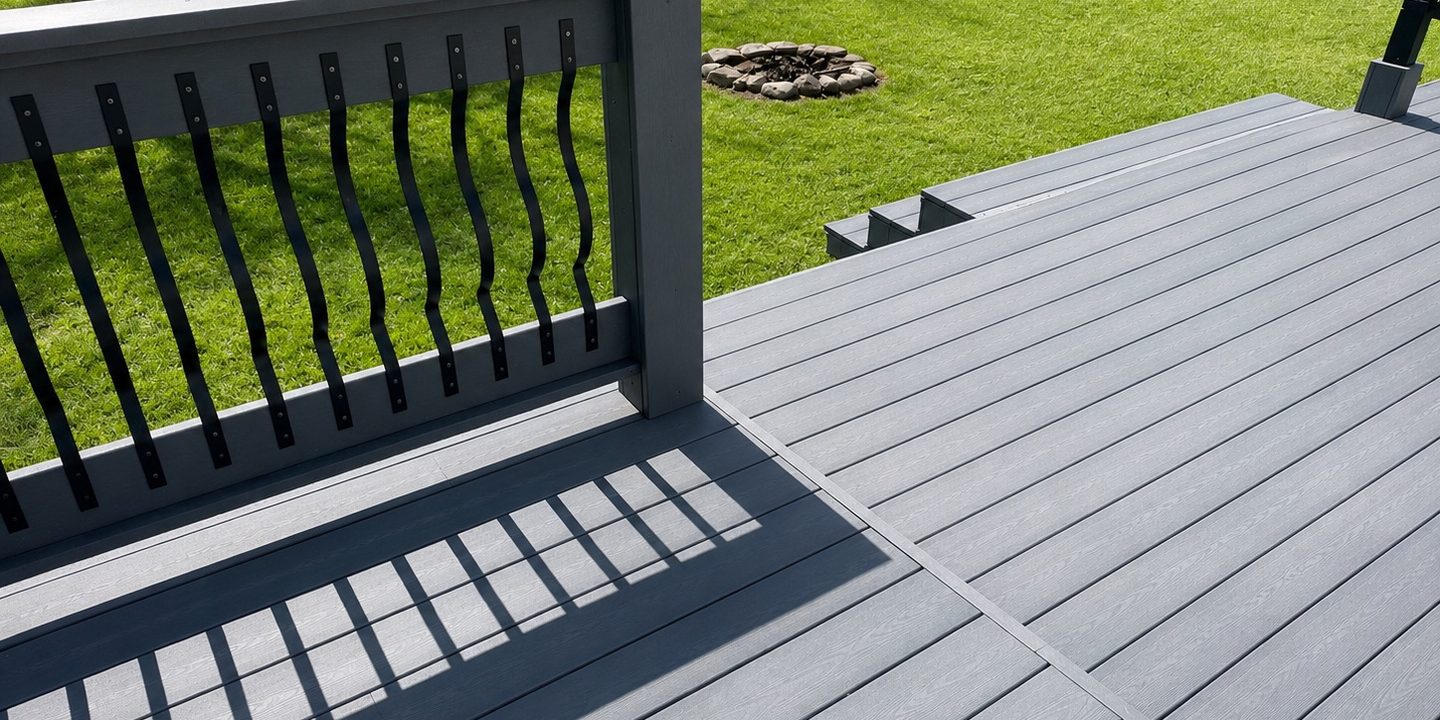
Choosing a material
Three Ways to Build the Same Deck.
Recycled plastic, cedar and composite, side by side, and what separates them long after your invoice is paid.
How to read it
Year One Looks the Same. Year Ten Does Not.
On the day it goes down, all three look like a finished deck. The gap opens in year five and it keeps opening for as long as you own it.
Beautiful, and hungry
A genuinely lovely material with the lowest price to get started. It is also organic, which means it takes on water, feeds mould, greys, splinters and wants refinishing on a schedule for the whole of its life.
Part wood, part plastic
Wood flour bound in plastic, usually with a protective cap. Lower maintenance than timber, but the wood content is still wood content, and it is generally not rated for ground contact or permanent immersion.
No wood in it at all
Solid recycled HDPE. Nothing to absorb water, nothing to rot, no coating to fail, no grain to splinter: and safe in ground contact and in water.
Side by side
Plastic Lumber Compared With Cedar and Composite
What it costs over twenty-five years, not on the invoice.
Cost key · $ lower $$ mid $$$ higher
| Feature | Grey is Green 100% recycled plastic lumber |
Cedar lumber | Composite decking |
|---|---|---|---|
| Material | 100% recycled HDPE | Natural wood | Wood fibres & plastic |
| Expected lifespan | 50+ years* | 15–25 years | 25–35 years |
| Maintenance | Very low | High | Low |
| Rot resistant | Yes | No | Better than wood |
| Splintering | No | Yes | Rare |
| Moisture absorption | None | High | Low |
| Mould & mildew | Resistant, clean as needed | Can occur | Can occur on surface |
| Insect damage | Resistant | Susceptible | Resistant |
| Weight | Approx. 13 lb (1×6×8) | Light | Heavy |
| Slip resistance | Textured surface available | Fair | Good |
| Painting or staining | Not required | Required | Not recommended |
| Environmental impact | 100% recycled HDPE | Renewable resource | Varies by brand |
| Typical upfront cost | $$–$$$ | $ | $$$ |
| Long-term cost | Low | High | Moderate |
*Estimated service life depends on installation, use and environmental conditions.
Being straight about it
Where We Would Tell You to Buy Cedar
We sell one material, and it is not right for every job. You will find that out either way. Better it comes from us first.
Cedar makes sense when
- The look is the point: you want real timber grain and you are happy to maintain it to keep it
- The budget is the constraint: the lowest number today matters more than the number over twenty years
- It is dry and off the ground: a covered deck that never sits in water is cedar's best case
- You are replacing a few boards: matching an existing timber deck rather than starting over
Ours makes sense when
- It gets wet and stays wet: docks, shorelines, ground contact, the north side that never dries
- Nobody will maintain it: public furniture, rental property, a dock at a cottage you visit twice a year
- People are barefoot on it: no grain means nothing to splinter, wet or dry
- It sits against soil, feed or water: nothing in the board to leach out of it
- You are counting twenty-five years, not five: which is where the arithmetic turns over
Price It Against What You Are Using Now
Send the dimensions and we'll come back with a firm number, so you can put it next to your cedar quote and compare like for like.